There’s a version of reaching out to a venue that feels like a cold sales call: awkward, transactional, easy to ignore on the other end. And then there’s a version that flows like a natural next conversation with someone who already knows you’re serious.
The difference isn’t luck or connections. It’s preparation and timing.
I call it the attraction method: a way of showing up for a venue long before you ask for anything. The core idea is simple. Venues aren’t looking for artists who need them. They’re looking for artists who are ready for them.
What it means to be ready
Readiness isn’t just having finished work. A venue decision-maker, whether it’s a gallerist or a coffee shop owner, is assessing you quickly (we all form quick opinions these days).
What they see has to signal that you’re a serious professional worth their time and wall space.
That means:
- Your work is professionally framed and properly prepared for installation.
- Your online presence reflects an active career.
- You can talk about your work, and present a case for it, with confidence.
Let’s pause to emphasize that last one. The ability to have a real conversation (not a pitch, a conversation) is what separates an artist worth knowing from someone who just needs a wall.
[ Start with spending time on your artist statement. ]
Of course, venues specific to the art world will put more weight on these than alternative venues, but you might as well practice for the big show.
The timeline for galleries versus alternative venues
Before I get to the details, it’s important to know that I originally developed the attraction method with galleries and museums in mind. Here’s why.
Getting into a serious gallery can take years of groundwork: researching and visiting multiple times, connecting on social media with substance, sending postcards consistently, attending openings, getting to know artists in the gallery’s stable, building familiarity before inquiring.
Museum exhibitions operate on even longer timelines because of the bureaucracy involved and funding needed.
At the heart of these long runways lies a truth that is critical to understand: those in charge of art world institutions prefer to do the choosing rather than responding to inquiries.
Alternative venues work differently. A boutique hotel, a winery, a coffee shop. These spaces typically have one decision maker who is far more accessible than a museum curator. The path from first contact to a yes can be weeks. Sometimes mere days. Not as much relationship building is needed.
I want to be clear that while galleries can be fantastic for your art career, their white-walled spaces shouldn’t be the only ones on your radar. They definitely shouldn’t be the bottleneck.
How to apply the attraction method to alternative venues
Even with a shorter timeline, the fundamentals still apply.
Do your homework before you visit.
Look at the venue’s website, all of it. Check their social media. See if they have media coverage. Get a sense of their aesthetic, their audience, their programming.
Find other artists who have shown there before and ask about their experience.
Visit in person before you announce yourself.
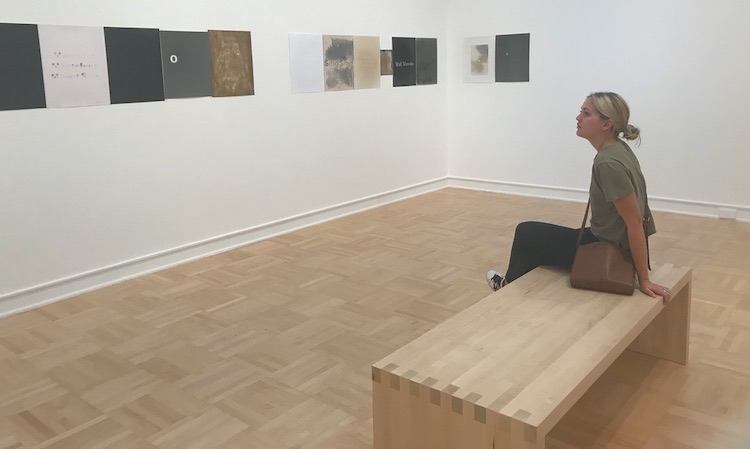
Go as a customer first. Assess the lighting, the wall surfaces, the hanging options, the traffic patterns, anything distracting patterns that might compete with your work.
Go when it’s busy, then when it’s quiet. Take notes. Add everything to what I call an Opportunities Tracker, a database for spaces where you see real possibility.
When you do reach out, make it clear you’ve been paying attention.
There’s a significant difference between “Can I show my art here?” and “I’ve been coming in for a few months and I think my work would really resonate with your clientele.” One is a pitch. The other is the start of a real conversation.
If you’ve become a genuine part of the space’s community (going to their events, buying something, bringing a friend) you shouldn’t be surprised if they’re the ones who ask about your availability to show there.
The result of doing this consistently
When you build relationships before you ask, two things shift. You stop waiting to be discovered, and you stop the premature inquiries.
You become someone worth noticing. And the ask, when it comes, doesn’t feel like a pitch to either party. It feels like the obvious next step.
Listen
The Beyond White Walls Series
Start with episode 262.