42 Ways to Improve Marketing Results
If marketing is everything you do to build your reputation and sell your art, there are a lot of areas in which you could improve. In which we could all improve.
I share this list with some hesitation. It’s intended as a checklist to work through, not to tackle at once.
Remember, our businesses and careers are works in progress.
Your Name
1. Decide on a single professional artist name and use it consistently for your art business – if you want to be remembered. I don’t care what it is and it doesn’t have to be the same name you sign to your art.
It’s critical that people can easily find you by your name and associate your name with your art.
Networking
2. Meet more people! The more people you know, the more opportunities you will create.
3. Show other people you care about them. Focus on building trust and relationships rather than selling to everyone who crosses your path. Along similar lines …
4. Keep notes on people on their business cards and add to your database so you can personalize your relationships.
5. Send “It was nice to meet you” cards or emails after connecting with someone (unless it wasn’t nice to meet them and you don’t care if you ever see them again).
Branding & Image
6. Use the same font and colors for all of your marketing material. And please! Stay away from
Organize Your Busy Art Career with Evernote
I am writing this draft in Evernote on my iPad while taking the light rail train into Denver to see a few art shows.
When I want a document that I will reuse and share with students, clients, or my team, I create it in Word, Pages, or Google Docs.
When I want to save drafts of documents or to store something to remember, it goes straight to Evernote where I can access it across devices.
Evernote is an app that organizes information into digital notes and notebooks. It would be impossible for me to keep track of all the information I need to without it.
Here’s a peek at how I use Evernote in my life and business along with suggestions for how you might use it in your art career.
Keep Your Travel Information in One Place
This might be my favorite use of Evernote. In your Travel notebook you might store:
- Hotel arrangements
- Flight details
- Car rentals
- Contact names and information
- Directions
- Things you want to do and see when you arrive
- Local restaurants
You might also store travel information for your family or for friends who are visiting.
Capture Content Ideas
One of the problems I hear most often from artists is that they don’t have anything to say. And this is a problem when so much of your marketing is based on the written word.
No more worries! The minute you have a bright idea, you can start a note in Evernote. Save drafts for:
How to Make a Dynamite First Impression
You only get one chance to make a first impression. True? True!
Competition is fierce in today’s art market, and you must distinguish yourself.
How will people come to know you? More importantly, how will they remember you?
Consider this advice when you want to be memorable in the right way.
Be prepared.
There is no excuse to go into a meeting or situation blindly when you have the virtual world readily available. A simple check with search engines or a social media account might lead you to a treasure of information.
Conduct your research in advance to show people that you’ve heard of them – this always impresses.
You might also discover facts in your research that will help you skillfully navigate any conversation.
Be on time.
The little computer we all carry around in our purses and pockets has made it far too easy for us to be tardy to appointments. All we have to do is text someone to tell her we’re running late.
This is usually fine when you know the other person well. It’s not fine if it’s your first meeting or if you make it a habit.
Be interested.
People will think
Processing Loss Through Your Art
A gentle warning before you read this. This was supposed to be a celebration article, but things happened that led me in a different direction. You might find it sad.
Stick with me because there is a message here that you might need. Maybe not now, but someday. And I promise that there is a happy ending.
Thank you in advance for allowing me to share this story with you.
Let’s start with the celebration. This week I celebrate 15 years of writing a weekly email to artists, which I mark as the anniversary of Art Biz Success. The newsletter is now posted here on the blog where you’re reading it.
It was on March 25, 2002 that I sent my first private email as a sample to artists I found on the Internet.
I can’t promise this newsletter and corresponding blog post will go on forever. I can’t even promise they will happen next week. But I’m pretty proud that I have never missed a weekly issue. That’s 780 newsletters if you’re counting.
This week’s newsletter – the very one you’re reading now on the blog – was a close call. Here’s what happened.
The Art Biz ep. 7: 4 Levels of Business Insurance for Artists
Business insurance!
That’s our topic for this Art Biz Podcast.
Listen in as Claudia McClain, founder of HomeBusinessInsurance.com, addresses the various levels of an artist’s career and the kinds of insurance you need at each point.
You never think about business insurance until someone asks to see your certificate of insurance or, more likely, until it’s too late. Until something bad has happened.
If you are an artist selling your art and you don’t have a specific policy for your business, this episode is for you. Refrain from clicking the Play button at your peril …
Level 1: Homeowners Insurance Only
This is the earliest phase in an artist’s career and is for hobbyists only. You’re making art just for yourself, not to sell.
At the point when you start selling, you are considered a business by the IRS and must take additional steps to protect your business.
Level 2: Incidental Business Occupancy Endorsement
This is a very affordable option for your home studio, which is tacked onto your homeowners’ policy.
It doesn’t cover the instances when you take your art outside of your home, and it might not cover liability when you have visitors to your home studio. That’s when you need …
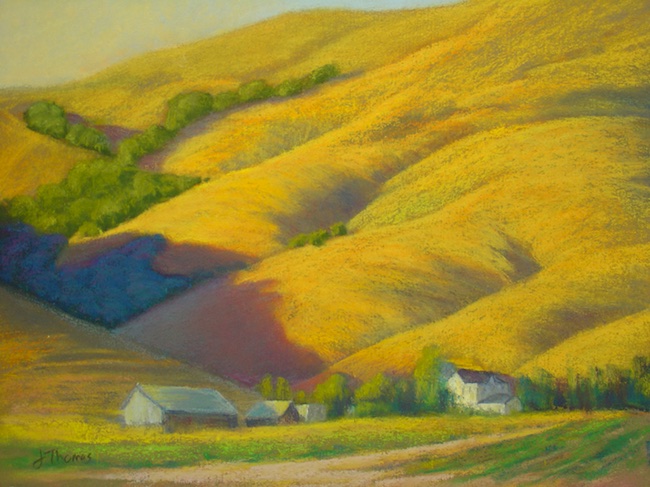
Thriving as an artist in a rural market
Artists in rural markets often find it difficult to get support and locate opportunities that are close to them, much less sell their art.
How do you navigate your rural market?
What do you do differently than artists in metropolitan areas?