Alyson Stanfield

Why artists should (and shouldn’t) blog

There are so many reasons why artists should maintain a blog, chief among them is that blogging helps you understand your work better—if you are honest in your writing.

But before I encourage any of my clients to blog, I first need to know that they’re okay with writing. Blogging is only for you if you want writing to be part of your practice.

Why artists should (and shouldn’t) blog Read

Oil painting of a pregnant woman holding her belly as she stands by a window, looking out onto a winter landscape of a spindly tree with no leaves, a spiritual metaphor for Mary awaiting a new dawn, waiting to bloom like the tree will in spring.

Why nobody came to your art show (271)

You did the work. You finished the art, delivered it on time, and hung the show. So why did only a handful of people show up to your opening?

In this episode, I walk through the most common reasons artists lose attendance at exhibitions, open studios, and art festivals, and what you can do differently next time. It has less to do with the event or how many times you post to social media and everything to do with relationships.

Why nobody came to your art show (271) Read

Glass art by Hildegard Pax

Do you have too many income sources in your art business? (269)

There are many ways to make money as an artist, but adding more income sources doesn’t necessarily lead to more income. Each one requires time, energy, research, marketing, and systems.

In this episode, I clarify the difference between an income source and an income stream, examine the real cost of diversification, and offer questions to help you decide whether a source deserves a place in your art business—or needs to go.

Do you have too many income sources in your art business? (269) Read

Textural contemporary abstract painting in shades of yellow, gold, and silver.

How curiosity and research deepen your studio practice (268)

Research isn’t only an academic exercise — it’s a commitment to following your curiosity, and it’s inseparable from making strong work.

In this episode of The Art Biz, I make the case that the artists who build enduring careers are the ones who keep asking questions: about their subjects, their materials, and anything else that attracts them. Here’s what that looks like in practice, and why it matters even beyond the studio.

How curiosity and research deepen your studio practice (268) Read

Collage-style painting of a tan and red dilapidated brick building with weathered green shutters and a palm-like plant growing from the roof.

How much time will your art career take? (267)

The artists who ask me “how much time?” are usually the ones still deciding whether they’re in. How much time should you spend on business versus making art, and how long before any of it pays off?

In this episode of The Art Biz I answer both truthfully — including a number you might not want to hear — and offer a better question to ask yourself instead, one that has less to do with hours and everything to do with commitment.

How much time will your art career take? (267) Read

Still life painting of a bowl of vibrant oranges, a detailed Portuguese tile with a blue and orange pattern, a small blue and white bird, and a solitary skeleton key hanging on a nail

Making a living from your art (266)

Making a living from your art requires more than talent and desire. It demands financial clarity, the right mindset, and a community of artists who pull you forward. It means committing to your studio practice above all else, embracing structure, and showing up for marketing consistently.

If you’re considering taking the leap, here’s what that actually looks like.

Making a living from your art (266) Read

Christie Marks oil and acrylic painting of a large pink and white lotus flower with dramatic, dripping rich colors like magenta, turquoise, and yellow in the water’s reflection

Use the attraction method for art venues before you make the ask (265)

So many artists reach out to venues too soon — before the relationship exists and before the venue has any reason to say yes.

Introducing the attraction method for building visibility with a space manager/director/curator long before you make an ask. It removes the awkwardness and allows you time to ensure a good fit. When the time comes to ask for a show, you’re not a stranger.

Use the attraction method for art venues before you make the ask (265) Read

Abstract acrylic painting by Gail Salzman of a combination of large geometric blocks and curved, organic elements in earth tones of olive green and ochre contrasted with softer tones of peaches and tans.

The artists who don’t wait to be chosen (264)

Waiting for gallery representation or other opportunities to cross your path is a common theme I see among artists, but it’s not a good strategy.

In this episode, I make the case for taking control of where and how your work is seen, with real examples of artists who showed up in unexpected places and made it work. If you’ve been cycling through juried shows or hoping a gallery will find you, this one is worth your time.

The artists who don’t wait to be chosen (264) Read

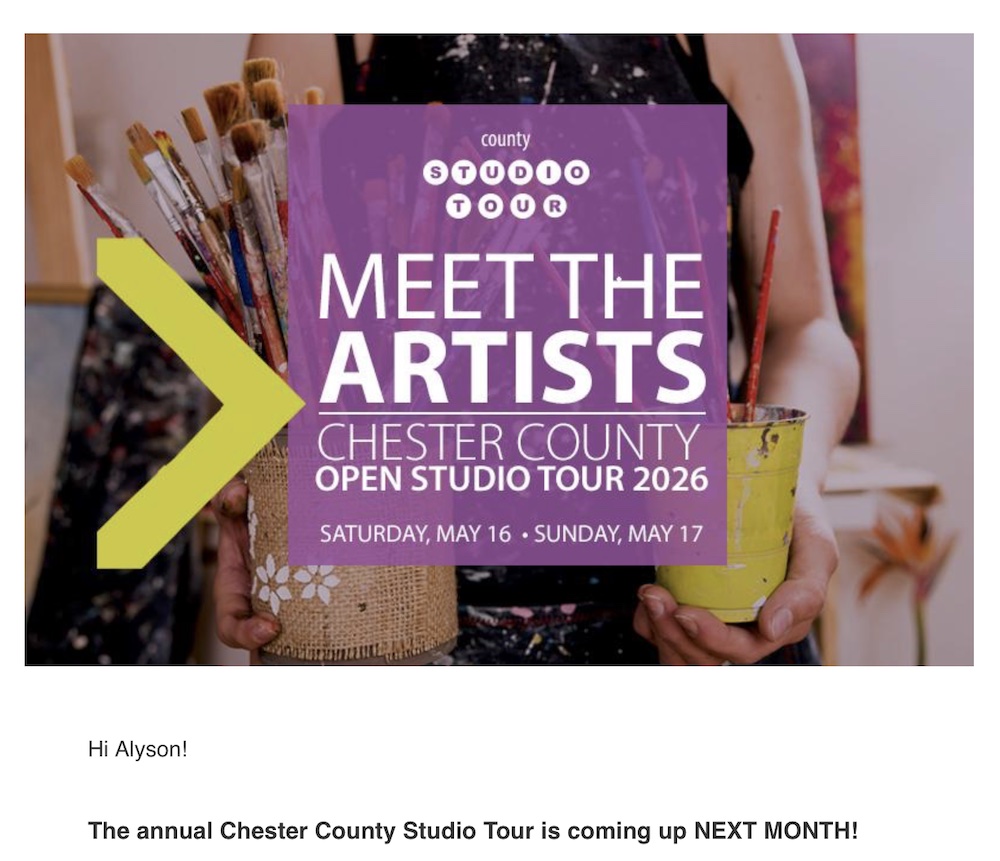
Save the date announcement from Chester County, Pennsylvania Studio Tour.

How to write an art show invitation: announcing, commanding, or inviting?

An art show invitation has two jobs: give people everything they need to know about the event, and use a tone that makes them actually want to come.

Here’s how to decide between announcing, commanding, and inviting, what to include when space is tight versus when it isn’t, and the common mistakes artists make on their announcements and invitations.

How to write an art show invitation: announcing, commanding, or inviting? Read

Scroll to Top