Marketing Material and Resources

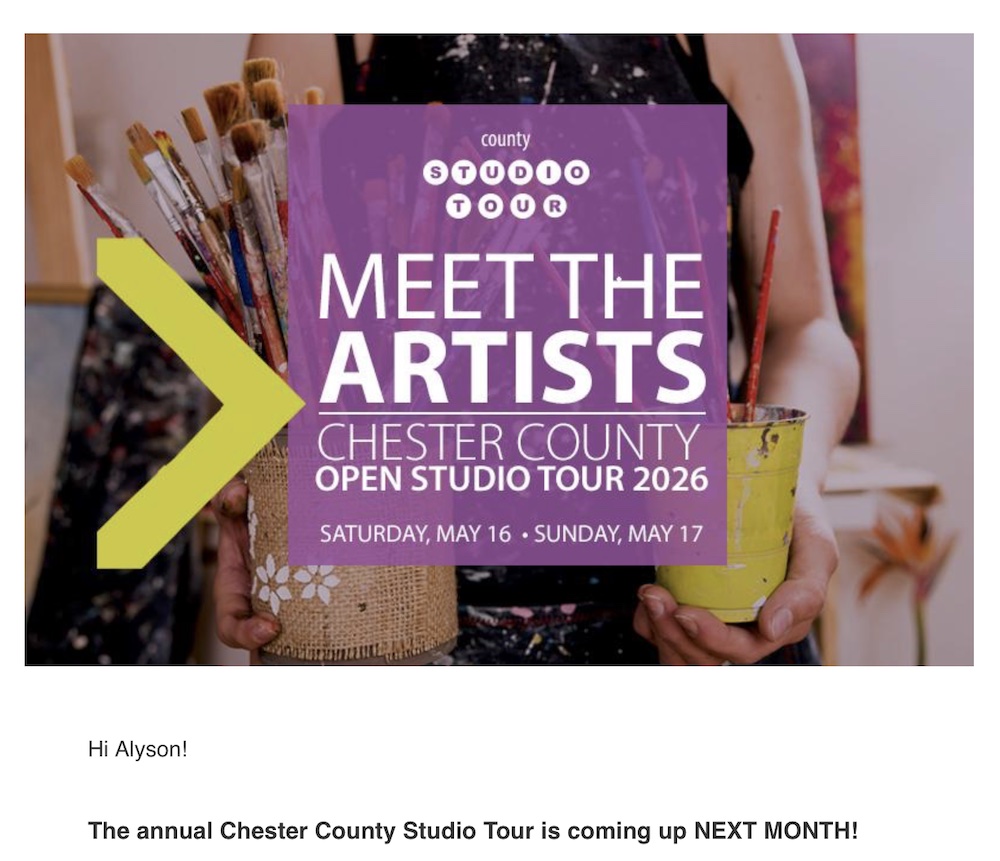
Save the date announcement from Chester County, Pennsylvania Studio Tour.

How to write an art show invitation: announcing, commanding, or inviting?

An art show invitation has two jobs: give people everything they need to know about the event, and use a tone that makes them actually want to come.

Here’s how to decide between announcing, commanding, and inviting, what to include when space is tight versus when it isn’t, and the common mistakes artists make on their announcements and invitations.

How to write an art show invitation: announcing, commanding, or inviting? Read

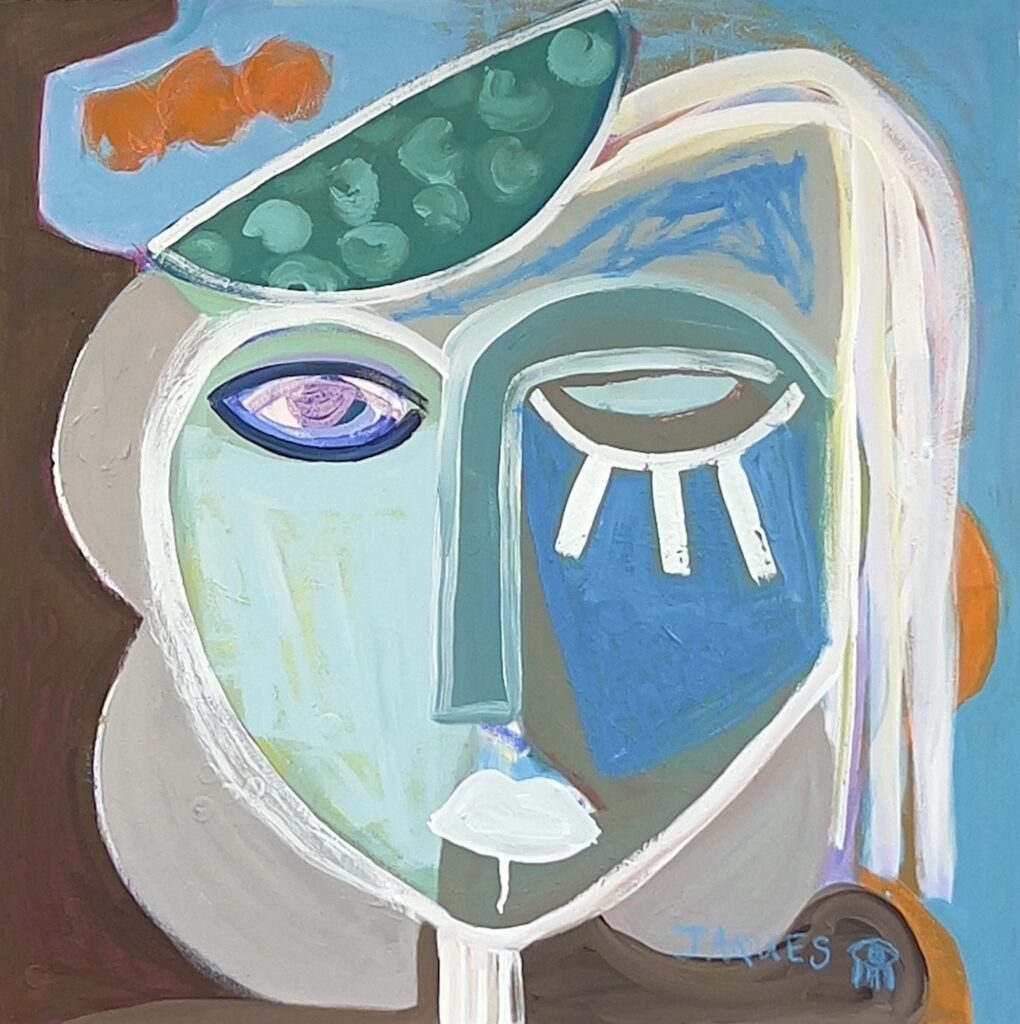
Aleea Jaques painting

Checklist for Crediting Your Art

You are absolutely right to do whatever you can, legally and within reason, to protect your intellectual property (your art).

But what I can’t seem to reconcile is when artists aren’t taking precautionary steps to claim ownership in the first place.

I’m talking about giving yourself credit whenever and wherever you show your art—with your name and a complete credit line—even on Instagram.

Checklist for Crediting Your Art Read

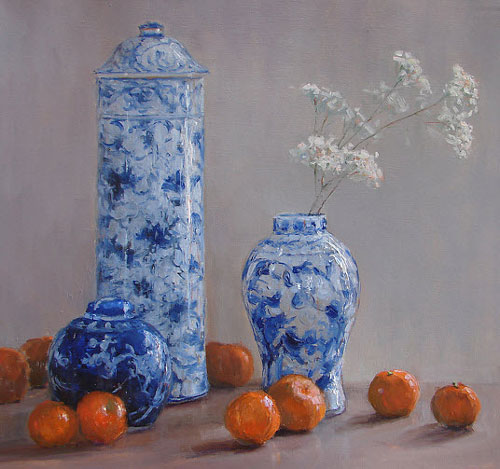
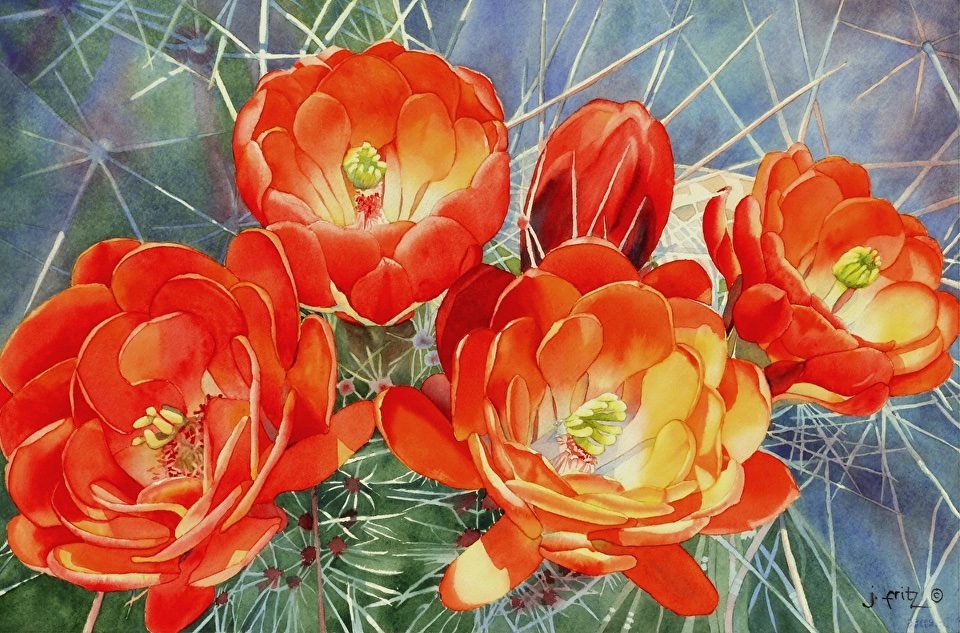
Watercolor painting by Jane Fritz

The purpose of your artist newsletter

An artist newsletter is not for sales. Rather, it helps you maintain a warm connection with subscribers. It’s a commitment you make to yourself and your art.

Without the nurturing, you might find yourself having to reintroduce yourself at some point to a list that has gone cold.

Bonus: Staying in touch makes you the artist who comes to mind when people look for art.

The purpose of your artist newsletter Read

How to Leverage an Article About Your Art

Whether it is in a newspaper or magazine or published on a blog, website, or as a podcast, you are deservedly thrilled and want to share the good news.

How do you make the most of an article about your art?

The extent to which you share the article and how you share it depends on the importance of the article and the format in which it was published.

How to Leverage an Article About Your Art Read

How to name your art business (56)

One of the first steps an artist makes when turning professional is to decide on an art business name, and many new artists make this more complicated than it should be.

Allow me to bottom line this entire article: If you are a fine artist, your first choice is to always use your given name for marketing your original art.

And yet you might resist this. Read and listen to find out why I’m right.

How to name your art business (56) Read

The Art Biz ep. 47: Using Real Mail to Delight

Email is terrific. It’s fast, inexpensive, and connects to other online resources. But along with email comes a few headaches—primarily, and I don’t have to tell you this, too much of it.

It’s stupidly easy to type up a message and press send. Everyone does it. Every day. And they’re doing even more of it right now because even more of our lives are lived in the digital space while we are staying at home. That means there is a dizzying number of emails flying over the airwaves.

How can you make sure your email is being seen by those you want to stay connected to? You can’t.

I don’t want you to discount email completely, but it seems like a good time to try a different tactic—to revisit a strategy for sending real mail that lands in a real mailbox.

4 Reasons You Should Send Real Mail Now

There are 4 reasons why I’m raving about real mail to my students, members, and private clients.

1. Real mail is tactile.

Envelopes and postcards are things you can touch. You can cut, tear, and unpack a package (sometimes you can even smell it).

Handwritten notes enhance your emotional bond with recipients—something that can’t be duplicated with email. I can’t think of a single email, regardless of how kind it was, that evokes the same level of emotion as a piece of mail with handwriting.

This tactile quality is as important to you as to the recipient. I am certain you will experience more joy writing a single note or shipping a single package than you will sending 500 emails.

Couldn’t we all use a little more joy right now?

The Art Biz ep. 47: Using Real Mail to Delight Read

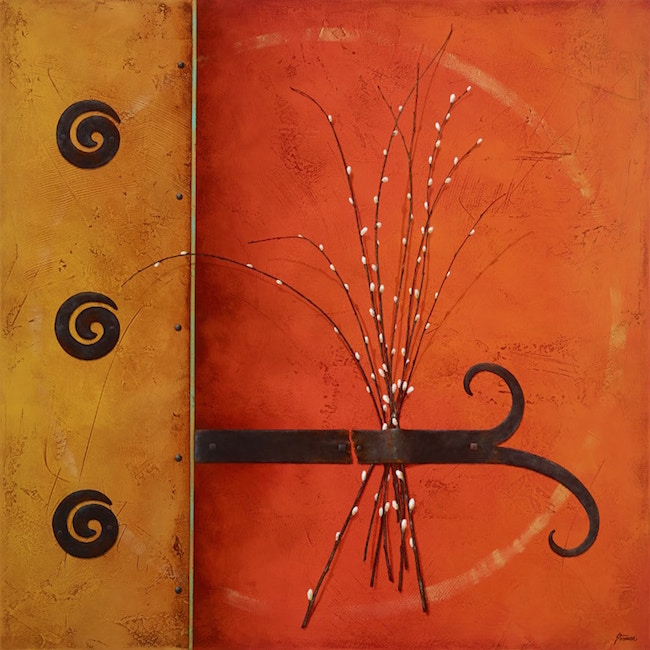
Theresa Beckemeyer, Chautauqua

Artist Bio vs. Artist Statement vs. About Page

Are you confused about the difference between your artist biography and artist statement? I’m here to help!

See if these explanations give you a better picture of these two documents.

Artist Biography

Your professional artist bio is kind of like your résumé in paragraph form (but less boring). It highlights your top accomplishments—usually with the most recent and most important at top.

Your bio gets to the point. It’s not a place for you to share everything you’ve ever done or get into your personal life.

Your bio is written in 3rd person unless it’s an autobiography, in which case you’d use the 1st person.

Formula for a 3-Paragraph Artist Bio

Artist Statement

Your artist statement is about your art, not about you. More to the point, it’s about the current direction of your work, not a history of how you got to where you are now.

Your artist statement is written in the 1st person.

Artist Bio vs. Artist Statement vs. About Page Read

Scroll to Top

Consider 44 possible reasons why your art isn't selling.

Cover of free report: When Your Art Isn't Selling
  • External Factors
  • The Work Itself
  • How You’re Showing It
  • The Buying Experience
  • How You’re Connecting
  • How You’re Promoting It

CAN I SEND YOU THE LIST?

Be sure to check all of your email folders to ensure delivery. You’ll also receive my regular news for your art business.

Privacy + Terms